
Ghost Jobs in 2026: Statistics, Laws and How to Spot One
What a ghost job is, how common ghost jobs really are (sourced data, 2022 to 2026), where the law now requires disclosure, and a 20-point score to spot one.

Raman M.
Software Engineer & Founder of ResumeFast

On this page
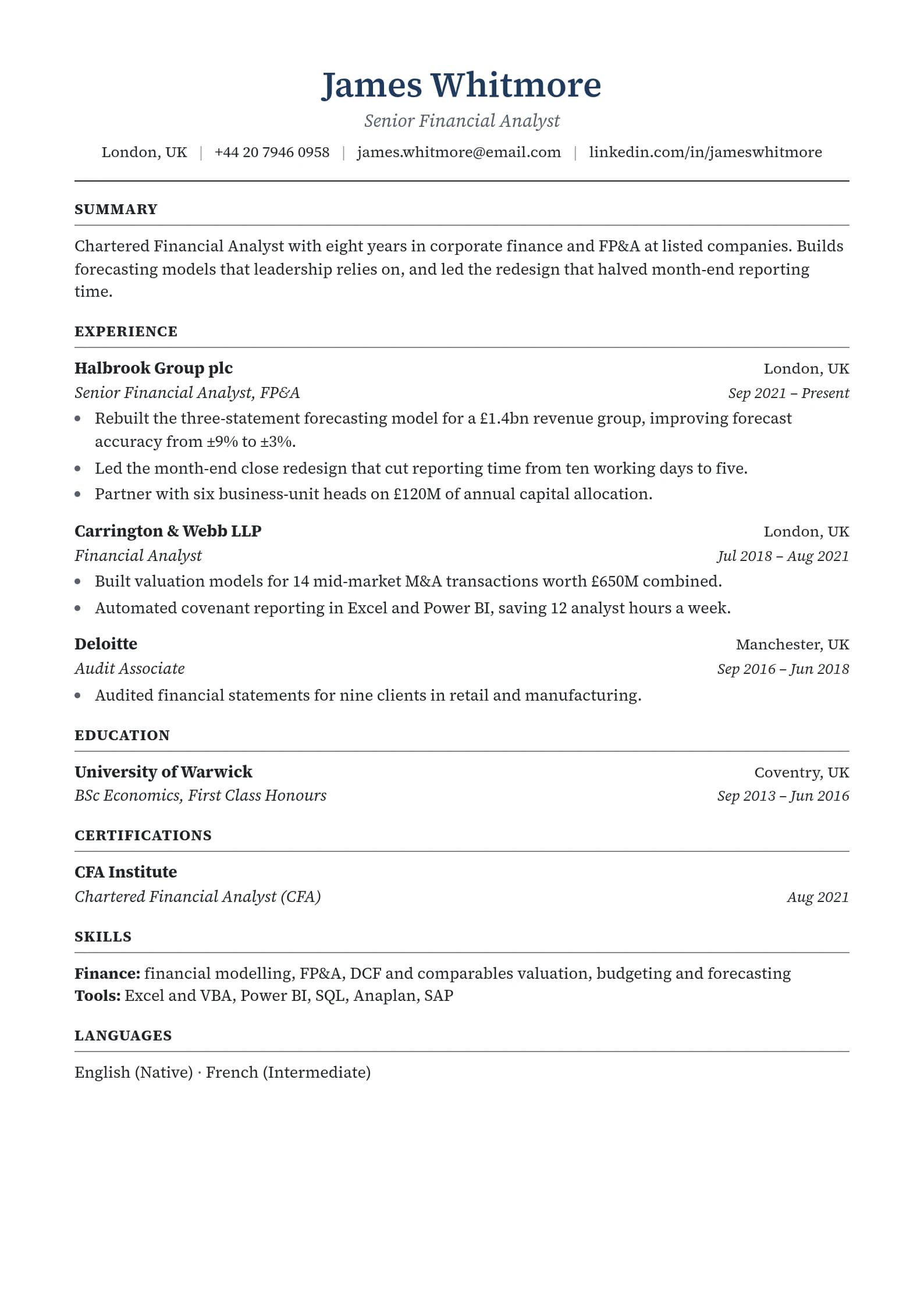
Build a resume that gets interviews
- ATS-optimized templates
- AI-powered writing
- Free to start
No credit card required
You found a role that reads like it was written for you. You tailored your resume, applied the same evening, and waited. Three weeks later the listing is still up, freshly marked as reposted, and nobody has written back.
Sometimes there was never a job. A ghost job is a job posting for a position the employer is not actively trying to fill right now: the role is already filled, frozen, or exists only to collect resumes. The best posting-level data puts ghost jobs at roughly 1 in 7 to 1 in 5 listings, and as of October 2026 they are not illegal under U.S. federal law, although Ontario now requires employers to say whether a posting is for a real vacancy.
Below: every ghost job statistic we could trace to a primary source, what each one measures, the law as of October 1, 2026, and a five-minute scoring framework.
TL;DR
- Ghost jobs are common, but "most jobs are fake" is not what the data says.
- Greenhouse classifies 18 to 22% of jobs posted on its platform each quarter as ghost jobs (2024). Clarify Capital found 1 in 7 active Indeed listings had been live 30 days or more (February 2026).
- Ontario's disclosure rule took effect January 1, 2026. New York's bill passed both chambers and has not been signed. No federal bill exists.
What is a ghost job?
A ghost job is a publicly advertised job posting for a position the employer has no current plan to fill. The Congressional Research Service, in its 2025 brief, defines ghost postings as "online job postings for positions that do not exist, or that employers are not planning to fill immediately." Greenhouse's 2024 State of Job Hunting report is blunter: "positions advertised with no intent to hire."
They come in five flavors:
- The pipeline posting: no opening today, but the company wants resumes on file.
- The zombie posting: the role was filled or cancelled and nobody took the ad down.
- The frozen req: the team wants to hire, but the budget isn't approved.
- The foregone conclusion: an internal candidate is already the pick.
- The signal posting: an ad meant to make the company look like it's growing, or to tell overworked staff help is coming.
All five come from a real employer, posting under its own name, that doesn't want your money. That is what separates a ghost job from a scam.
Ghost job vs. job scam
| Ghost job | Job scam | |
|---|---|---|
| Who posts it | A real employer, under its own name | A scammer, often impersonating a real company |
| What they want | Resumes, appearances, a process box ticked | Your money or personal data |
| Your main risk | Wasted time | Lost money, identity theft |
| Typical tells | Old or reposted listing, vague duties, "future opportunities" language | A fee for training or equipment, a check to deposit and forward |
As the FTC's job scam guidance puts it: "Honest employers, including the federal government, will never ask you to pay to get a job." Our guide on how to spot fake job postings and scams covers that side.
Ghost job statistics at a glance
We opened each source and checked the number, year and sample on October 1, 2026.
| Finding | Source | Year | Sample and method |
|---|---|---|---|
| 18 to 22% of jobs posted on Greenhouse in any given quarter are classified as ghost jobs | Greenhouse | 2024 | Platform data; classification method not published |
| 3 in 5 candidates suspect they have encountered a ghost job | Greenhouse | 2024 | Survey of 2,500 workers in the US, UK and Germany |
| 1 in 7 active listings had been live 30 days or more; 4% for four months or more | Clarify Capital | 2026 | 176,268 Indeed listings, 49 industries, every state, scraped February 2026; 30+ days flagged |
| 21% of senior-level postings and 51% of wholesale postings were flagged | Clarify Capital | 2026 | Same scrape and 30-day rule |
| 40% of hiring managers say their company posted a fake job in the past year; 3 in 10 companies had one live | Resume Builder | 2024 | Pollfish survey, 649 hiring managers, launched May 22, 2024 |
| 70% of those hiring managers called fake postings morally acceptable (43% definitely, 27% probably) | Resume Builder | 2024 | Same survey |
| 81% of recruiters say their employer posts jobs that don't exist or are already filled | MyPerfectResume | 2024 | Poll of 753 US recruiters |
| 68% of managers had postings active over 30 days; 1 in 10 had one open over six months | Clarify Capital | 2022 | 1,045 managers, August 31 to September 1, 2022 |
| Hires per US job posting fell from 0.75 in 2018 to below 0.5 in 2023 | Revelio Labs | 2023 | Postings matched to new positions within six months by company, role, seniority and state |
| 30% of June 2025 job openings "never resulted in a hire" | MyPerfectResume | 2025 | BLS openings minus BLS hires; see the caveat below |
How to read these numbers honestly
Most ghost job statistics come from companies with something to sell: hiring software (Greenhouse), business loans (Clarify Capital), resume tools (Resume Builder, MyPerfectResume, and us). The CRS flagged in 2025 that such vendor surveys are hard to judge. That doesn't make them wrong. It means you should know what each one counts:
- Company-level numbers (Resume Builder's 40%, MyPerfectResume's 81%) count organizations that posted at least one ghost job. A company with 500 real openings and one fake one counts as a "yes."
- Posting-level numbers (Greenhouse's 18 to 22%, Clarify's 1 in 7) count listings. These estimate the odds that the job in front of you is a ghost.
- Proxy numbers (Revelio's hires per posting, Clarify's 30-day rule) also catch hard-to-fill roles, slow hiring and duplicates. Plenty of real jobs stay open longer than a month.
Our reading: at any moment, somewhere between 1 in 7 and 1 in 5 job listings is probably not backed by an active plan to hire. That's a reason to triage, not to stop applying. Note that a ghost posting can still produce an interview: in Resume Builder's 2024 survey, 85% of hiring managers at companies that contacted applicants for fake listings said candidates were interviewed.
The "openings minus hires" statistic, and why it misleads
One widely shared number subtracts hires from job openings in the government's JOLTS survey. MyPerfectResume's 2025 analysis found about 7.4 million openings and 5.2 million hires in June 2025 and concluded that more than 2.2 million roles "never materialized." The August 2026 JOLTS release, published September 29, 2026, gives 7.1 million openings and 5.2 million hires, a gap of about 27%.
Those numbers can't be subtracted that way. Per the BLS definitions, openings are "all positions that are open (not filled) on the last business day of the month," a snapshot. Hires are "all additions to the payroll during the month," a running total. A job posted on the 3rd and filled on the 20th counts as a hire but never as an opening. BLS also counts an opening only when a specific position exists, the job could start within 30 days, and the employer is actively recruiting from outside, conditions that should screen out pure pipeline postings.
The proof is in MyPerfectResume's own table: construction had 348,000 hires against 242,000 openings in June 2025. If the gap measured postings that never led to a hire, a negative gap would be impossible. The gap between openings and hires measures turnover speed, not fake jobs. Quote it as a labor market indicator, never as a ghost job rate.
Why companies post ghost jobs
The surveys disagree on how common ghost jobs are, but they agree on why.
| Reason | Evidence |
|---|---|
| Look open to talent, stay visible on job boards | 67% of hiring managers whose companies posted fake jobs wanted to appear open to external talent (Resume Builder, 2024); 38% of recruiters post to keep a job board presence when not hiring (MyPerfectResume, 2024) |
| Look like the company is growing | 66% wanted to suggest growth (Resume Builder); 23% of recruiters post to look viable during a hiring freeze (MyPerfectResume) |
| Placate, or pressure, current staff | 63% wanted employees to believe their workload would ease; 62% wanted employees to feel replaceable (Resume Builder) |
| Build a resume pipeline | 59% collect resumes to keep on file (Resume Builder); 50% of managers keep postings open because they're "always open to new people" (Clarify Capital, 2022) |
| Test the market | 36% of recruiters test job descriptions; 25% gauge how hard an employee would be to replace (MyPerfectResume) |
| Frozen budget | MyPerfectResume's 2025 report cites budget freezes, approvals and shifting priorities as reasons roles stay posted for months |
| Nobody took it down | Clarify Capital's 2026 report names forgotten listings; New York's bill would force removal within two weeks of a hire |
| Compliance postings | Some roles must be advertised by law. U.S. green card sponsorship through PERM requires, among other steps, a 30-day state job order and two Sunday newspaper ads for professional roles (20 CFR 656.17) |
Notice how many of these reasons target the company's own employees, not candidates. Most ghost jobs are an organizational shrug, not a conspiracy: a req nobody closed, a budget nobody approved.
Are ghost jobs illegal? The law as of October 2026
Ghost jobs are not illegal under U.S. federal law as of October 2026. The CRS found they are not explicitly prohibited; the FTC Act's ban on "unfair or deceptive acts or practices" could in theory apply, but proving an employer had no intent to hire would be difficult.
| Jurisdiction | Measure | What it requires | Status on October 1, 2026 |
|---|---|---|---|
| Ontario, Canada | Employment Standards Act, O. Reg. 476/24 | Employers with 25+ employees must state whether a public posting is for an existing vacancy, plus a pay range, AI-use disclosure, and a decision update to interviewees within 45 days | Law, in force since January 1, 2026 |
| New York | S8877 / A6292A | Employers with 100+ employees, and job sites, must state whether and by when they intend to fill the role, and remove filled postings within two weeks | Passed the Senate (April 28, 2026) and Assembly (June 2, 2026); not signed; would take effect immediately |
| New Jersey | S2136 | Existing-vacancy statement; removal within two weeks of filling or 30 days after posting, whichever is later; penalties up to $300, then $600 | Proposed; cleared the Senate Labor Committee in May 2026 |
| California | AB 1251 | Statement on whether the posting is for a vacancy; violations treated as unfair competition | Proposed; passed the Assembly 62 to 9 in June 2025, held in Senate Appropriations since August 29, 2025 |
| Kentucky | HB 57 (2025), HB 342 (2026) | Would prohibit postings for ghost jobs and set a penalty | Proposed; both sent to committee, no further action |
| Pennsylvania | HB 2321 | Disclose whether the role is existing, anticipated or new, a timeframe, and AI use | Proposed; introduced March 26, 2026, per HR Dive |
| U.S. federal | Truth in Job Advertising and Accountability Act | A draft written by an advocacy group that has been lobbying Congress; it has no bill number | Not introduced; HR Dive reported in June 2026 that no federal bills were pending |
Ontario is the only ghost job disclosure rule we found in force in North America. The province's guide defines an existing vacancy as "a position that is imminently available." General recruitment campaigns that don't advertise a specific position, and internal-only postings, are excluded. The rule doesn't ban pipeline postings; it makes them say so. In Ontario, a "no existing vacancy" statement is the most honest ghost job signal you'll get.
New York's bill goes further. Covered postings would carry one of three statements in bold capitals, such as "THIS POSTING IS NOT FOR A CURRENT VACANCY BUT THE EMPLOYER IS SEEKING RESUMES TO REVIEW IN THE FUTURE WHEN JOBS BECOME AVAILABLE." Fines start at $2,500 per publication or platform and double if the ad isn't corrected. Reed Smith's September 2026 update listed it as pending before Governor Hochul, and the Senate's bill page showed no signature or veto on October 1, 2026.
The Ghost Job Score: a 20-point check before you apply
The Ghost Job Score is our framework, not a research finding or a validated model: ten weighted checks built from the signals above, 20 points maximum. The higher the score, the less likely anyone is hiring.
| # | Signal | How to check | Points |
|---|---|---|---|
| 1 | The posting is old | 30 to 59 days scores 1; 60 days or more scores 3 | 0 to 3 |
| 2 | Reposted with identical text | The date refreshes but the description never changes | 2 |
| 3 | Missing from the company's careers page | Search the employer's own site for the title or req ID | 3 |
| 4 | Pipeline language | "Talent community," "future opportunities," "always accepting applications," or a "no existing vacancy" statement | 3 |
| 5 | Vague duties | No deliverables, tools, team or reporting line. Paste it into our job description analyzer: if it can't pull out specific hard skills, the role may not be defined yet | 2 |
| 6 | No pay range where the law requires one | Ontario requires ranges from employers with 25+ employees; New York from employers with four or more | 2 |
| 7 | Hiring freeze or recent layoffs | Company news, announcements or WARN notices in the last six months | 2 |
| 8 | No identifiable team or manager | You can't work out who the role reports to | 1 |
| 9 | No hiring timeline | Nobody can say when they hope to have someone start | 1 |
| 10 | A known dead end | You, or someone you know, applied to this exact req before and heard nothing | 1 |
| Score | What it probably means | What to do |
|---|---|---|
| 0 to 4 | Live role | Apply within days with a fully tailored resume |
| 5 to 9 | Unclear | Apply, and try to reach someone on the team the same week |
| 10 to 14 | Likely ghost or pipeline | Don't spend an hour tailoring. Reach a human first; apply properly only if someone confirms the role is open |
| 15 to 20 | Treat as a ghost | Skip it, follow the company, and spend the time on a fresher listing |
A worked example. A Marketing Manager posting at a New York software company: 52 days old (1 point), reposted twice with the same text (2), on the careers page (0), no pipeline language (0), duties like "drive growth initiatives" with no channels or targets (2), salary range shown (0), layoffs announced three months ago (2), no team named (1), no timeline (1), no prior application (0). Total: 9, the top of "unclear." Message the marketing lead before you invest an evening.
Leave two things out of the score: a huge applicant count and an "Easy Apply" button. They tell you about competition, not about whether the job is real.
What to do instead of applying into the void
- Verify on the careers page first. Job boards often carry copies of copies. If the req ID is gone from the employer's own site, stop.
- Apply while postings are fresh. As Clarify Capital's Joe Mercurio said with the 2022 survey, "A job that was posted 48 hours ago is more likely to be actively hiring than a job that was posted 3 months ago." See our guide to the best time to apply for jobs.
- Reach a human before you invest. For anything scoring 5 or more, ask someone on the team whether the role is open now and when they hope to have someone start. Use our templates for cold-messaging recruiters on LinkedIn, turn a reply into an informational interview, or try the low-energy approaches in networking for introverts.
- Don't overcorrect into "never apply online." Our hidden job market analysis explains why the "80% of jobs are never posted" claim doesn't hold up.
- Follow up once, then move on. Use our follow-up email templates; if a week passes in silence, take the hint.
- Plan your volume with real numbers. Ghost jobs make every stage of the funnel leakier. Plug your numbers into the hiring funnel calculator and compare them with our 2026 hiring funnel benchmarks.
When a posting passes the score, speed and fit decide the rest. ResumeFast is free to build with, including a plain-text download; Pro ($6.95 a month, cancel anytime) adds PDF and Word downloads and tailoring a resume to a specific posting. Whatever tool you use, apply the same filter to your resume that you apply to your search: a curated work history beats a complete one.
Still hearing nothing? Ghost jobs may not be the problem. See the resume black hole for the other places strong applications stall, and the job search strategy guide for the whole process.
How to cite this page
Figures and legal status were checked against their sources on October 1, 2026. For individual statistics, please cite the original source linked in the table, since those organizations did the underlying work. For the Ghost Job Score or the openings-minus-hires analysis, a suggested citation:
ResumeFast. "Ghost Jobs in 2026: Statistics, Laws and How to Spot One." October 1, 2026. https://resumefast.io/blog/ghost-jobs-2026
Before your next application, score the posting. If it comes in at 4 or under, move fast: build or tailor your resume with ResumeFast, free to build, with PDF and Word downloads on Pro.
Frequently Asked Questions
Are ghost jobs illegal?
Not under U.S. federal law as of October 2026, and no federal bill has been introduced. Since January 1, 2026, Ontario has required employers with 25 or more employees to state whether a public posting is for an existing vacancy. New York passed a disclosure bill in 2026 that awaits the governor, and several other states have proposed bills.
How common are ghost jobs in 2026?
Roughly 1 in 7 to 1 in 5 listings. Clarify Capital found 1 in 7 active Indeed listings had been live 30 days or more in February 2026, and Greenhouse's 2024 report classified 18 to 22 percent of jobs posted on its platform in a given quarter as ghost jobs. Bigger figures, like 81 percent, count companies that posted at least one ghost job, not listings.
How can you tell if a job posting is a ghost job?
Check whether the listing is old or repeatedly reposted, missing from the company careers page, full of pipeline language like talent community, vague about duties, missing a legally required pay range, or from a company with recent layoffs. No single sign is proof, so our Ghost Job Score weights ten signals into a 20-point total.
Should I still apply to a job that might be a ghost job?
Apply if it scores low and is fresh. If it looks uncertain, spend five minutes trying to reach someone on the team before you spend an hour tailoring. If the role is missing from the careers page or nobody can say when they plan to hire, put that time into a newer posting.
Why do companies post ghost jobs?
In a 2024 Resume Builder survey of 649 hiring managers, top reasons were appearing open to external talent (67 percent), suggesting growth (66 percent) and making employees believe their workload would ease (63 percent). Frozen budgets, internal candidates and forgotten listings also play a part.
Is a ghost job the same as a job scam?
No. A ghost job comes from a real employer under its own name and costs you time. A job scam comes from a criminal, often impersonating a real company, who wants your money or personal data. The FTC says honest employers never ask you to pay to get a job, so any request for fees is a scam.
Your resume is your first impression. Make it count.
Build an ATS-optimized resume that gets read, with AI help on every section.
No credit card required. PDF and Word downloads are $6.95 a month with Pro.
Continue Reading
View all articles
Which Industries Are Still Hiring in Spring 2026?

Spring 2026 Job Search: Strategy Guide for a Cooling Market

How to Pass an AI Job Interview in 2026 (and Your Rights)

How to Spot a Fake Job Posting: 2026 Scam Red Flags

How to Prepare for a Career Fair: Resume, Pitch, Follow-Up

Seasonal Job Resume: How to Land a Holiday Job in 2026
Build a resume that gets interviews
Ready to build your resume?