
The Best Time to Apply for Jobs in 2026 (Down to the Hour)
The best time to apply for jobs: within 4 days of posting, 6 to 10 AM employer time. Sourced data on the best day, hour and the months hiring peaks in 2026.

Raman M.
Software Engineer & Founder of ResumeFast

On this page
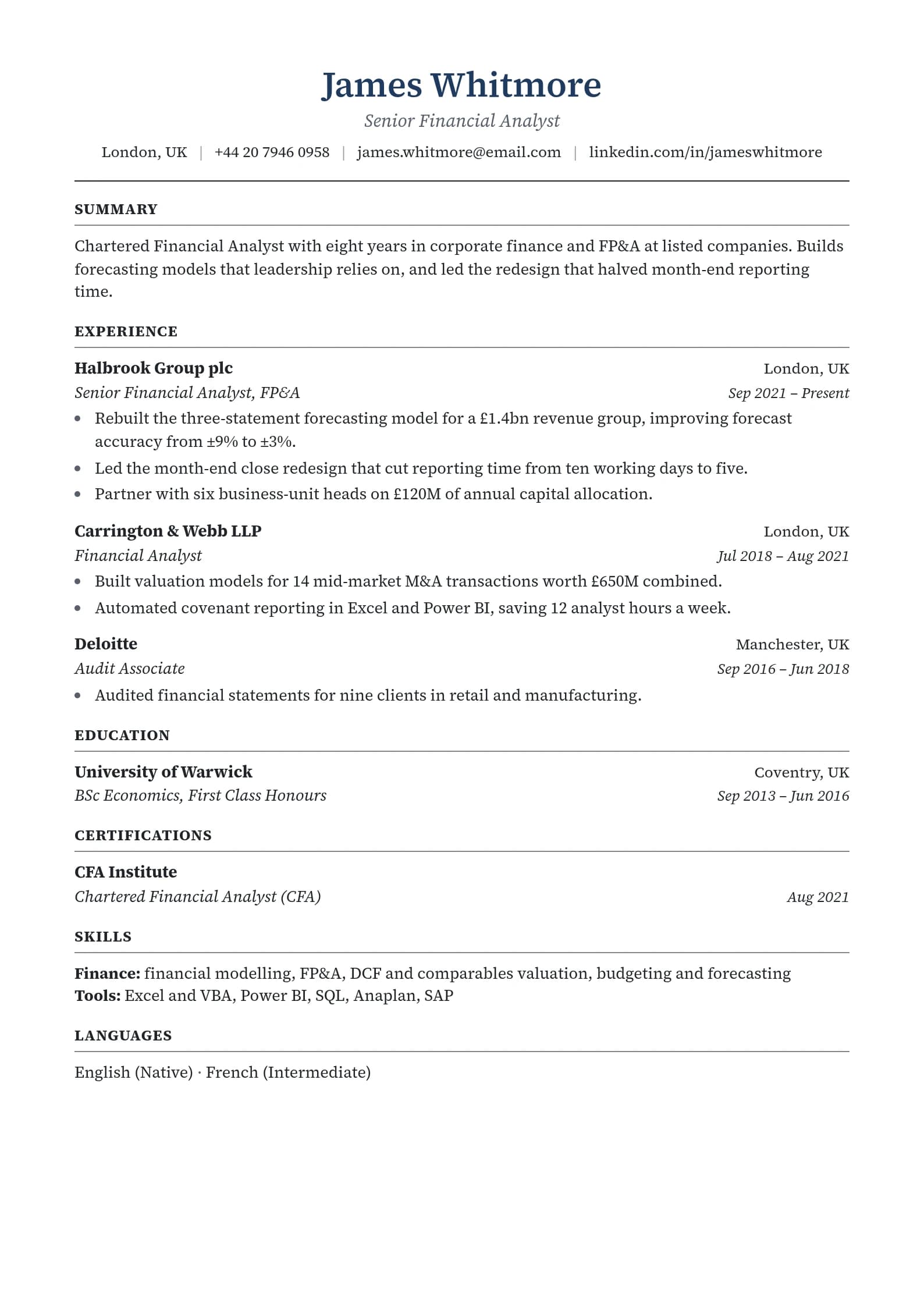
Build a resume that gets interviews
- ATS-optimized templates
- AI-powered writing
- Free to start
No credit card required
You spent three hours perfecting your resume. You tweaked the bullet points, ran it through a spell checker twice, and formatted it exactly right. Then you hit "submit" at 11 PM on a Friday, for a job that went live two weeks ago.
Both of those choices cost you something. One of them costs a lot more than the other.
The best time to apply for a job is within the first four days after it's posted, between 6 and 10 AM in the employer's time zone, and Monday is the strongest day in the data. Posting age matters far more than the hour: in a TalentWorks analysis of 1,600 applications, applying in the first 96 hours made an interview up to 8x more likely. Across the year, U.S. hires dip hardest in December and February and run highest from April to August, according to Bureau of Labor Statistics data.
Here's every number behind that answer, where it comes from, and how much weight it deserves.
When Applications Get Responses: What the Evidence Says
| Question | What the data shows | Source | How much to trust it |
|---|---|---|---|
| How soon after posting? | Days 2 to 4 after posting had the highest interview rate, up to 8x higher. Each later day cut the odds by 28%. After about 10 days: roughly 1.5% | TalentWorks, 2017, 1,600 applications | Medium: real outcomes, small sample |
| What time of day? | 6 to 10 AM employer time: 13% interview rate, nearly 5x the after-work rate. At 7:30 PM: under 3% | TalentWorks, 2017, 1,610 applications sent at random times | Medium: randomized, but small |
| Which day? | Monday applications got a 46% "hireability boost". Friday and Saturday did worst | TalentWorks, 2018, 4,000+ applications | Lower: correlation only |
| When is your competition active? | Monday is the most popular day to view and apply to jobs on LinkedIn; activity drops from Thursday to Saturday | LinkedIn Talent Blog, 2016, staffing-agency jobs | Behavior, not outcomes |
| Which months? | Hires run 27% below an average month in December, 15% below in February, highest in May and June | BLS JOLTS, 2016 to 2025, our calculation | High: official data |
A note on how old this is. The best public outcome data on timing is from 2017 and 2018, from TalentWorks, a startup that sold an automated application service. Its time-of-day test sent applications at random times, which is rare rigor for job-search data, but the samples are small and we haven't found a newer public study of interview rates by hour or weekday. Treat the hour and day as tie-breakers and posting age as the rule. (An earlier version of this post cited a "Tuesday to Thursday, 30% more responses" figure we couldn't trace to a primary source, so it's gone.)
Why Posting Age Beats the Hour and the Day
Posting age is the number of days since a job went live, and it's the timing factor with the biggest measured effect.
TalentWorks' explanation is about how hiring managers work: they post a role, give it a few days for applications to arrive, then review the batch. If there are good candidates, they interview a few, make an offer and stop looking at the posting. Your application needs to be in that first batch, before anyone has a shortlist they're happy with.
So if you have to choose, choose freshness. Don't sit on an application for a fresh posting just to hit a better weekday.
The Best Day to Apply for a Job
Monday is the best day to apply in the available data, and Friday and Saturday are the worst. TalentWorks' 2018 analysis found a 46% boost for Monday applications.
That's notable because Monday is also when your competition shows up: LinkedIn found it's the most popular day to view and apply to jobs. A plausible reading is that Monday applications land while recruiters plan the week's screening, while Friday and Saturday ones wait out the weekend under newer arrivals.
In practice: when you have a choice, submit Monday to Wednesday. When the posting is fresh, submit now.
The Best Time of Day to Apply
Apply between 6 and 10 AM in the employer's time zone. In TalentWorks' 2017 test, that window had a 13% interview rate. After 10 AM the odds fell by about 10% every 30 minutes, recovered briefly to about 11% around 12:30 PM, then dropped again. At 7:30 PM the chance was under 3%.
The detail most people miss: the effect disappeared when applications were timed to the applicant's clock instead of the employer's. A company in New York reads its inbox on Eastern Time, wherever you live. TalentWorks didn't prove why mornings win, so use the hour as a tie-breaker, not a reason to delay.
Seasonal Timing: Which Months Hires Actually Peak
Spring is not special in this data: hires climb from March into April and May, then stay high through summer. A "spring job search" does not need its own plan. Start in February so your resume is ready before the April rise, and use the same tailored-application routine all year.
The day and hour matter a little. The month tells you how fast to expect answers.
JOLTS (the Job Openings and Labor Turnover Survey) is the BLS survey that counts how many people U.S. employers hire each month. We averaged its not seasonally adjusted series for 2016 to 2025, leaving out the pandemic years 2020 and 2021. Each cell compares that month's hires to an average month.
| Month | All industries | Professional and business services | Retail trade |
|---|---|---|---|
| January | -2% | +5% | -16% |
| February | -15% | -8% | -14% |
| March | -7% | 0% | -4% |
| April | +7% | +14% | 0% |
| May | +13% | +9% | +10% |
| June | +15% | +10% | +10% |
| July | +9% | +9% | +2% |
| August | +11% | +1% | +6% |
| September | 0% | -5% | -2% |
| October | +6% | +4% | +18% |
| November | -11% | -15% | +14% |
| December | -27% | -24% | -24% |
Source: our calculation from BLS JOLTS hires, not seasonally adjusted: all industries, professional and business services, retail trade.
What that means for you:
- December is the slowest month for hires. It had the fewest in every one of the eight years we averaged. February is a clear second.
- Summer isn't a dead zone. Hires run above average from April through August, and not only for summer jobs: professional and business services run 9% to 14% above average from April to July.
- Hires lag applications. JOLTS counts a hire when the person joins the payroll, often weeks after applying. LinkedIn found applicants are most active in September and October, which leads to a big influx of new hires in January.
- 2026 is following the same shape. Through August 2026, February was the slowest month (about 4.1 million hires) and June the busiest (about 6.1 million).
Applying in October to December
October is still an above-average month for hires (6% above average overall, 18% in retail), so don't wait for January. November and December slow down unevenly: in December, job openings run about 11% below an average month while hires run 27% below. Roles stay posted while decisions wait for the new year.
Four tactics for Q4:
- Ask whether the role has to start this year. Some teams lose approved headcount if it isn't filled by year end; others are frozen until the new budget. The posting won't say which, so ask the recruiter: "Is the goal to have someone start before January?"
- Use holiday seasonal work as a stepping stone. Challenger, Gray & Christmas forecasts that retailers will add about 450,000 jobs in Q4 2026, after 461,500 in Q4 2025, the smallest seasonal gain since 2008. Competition is rising: Indeed Hiring Lab reported in October 2025 that job seeker interest in seasonal work was up 27% year over year, while seasonal postings were up only 2.7%. Retail hires peak in October and November, so apply in October. Our seasonal job resume guide shows what managers screen for.
- Check posting age and whether the role is real. Before you spend an hour on an application, check how long the listing has been up, whether it was reposted, and whether it also appears on the company's careers page. Our ghost jobs guide covers the warning signs.
- Use December for networking. December applications move slowly, but January hires run above average in professional and business services (+5%) and financial activities (+13%). A mid-December note to a former colleague ("What's your team planning for Q1?") puts you in the conversation before those roles post. Networking for introverts shows how to do it in writing, one person at a time.
How to Apply Within 96 Hours Without Rushing
Set job alerts for your target titles so you see postings within hours, not days. LinkedIn and Indeed both show how long ago a job was posted: a 1-day-old posting gets your attention today, a 3-week-old one goes to the bottom of the list unless you have a referral.
Speed only helps if the application is still tailored. Keep a base resume ready and adapt it per posting. ResumeFast's keyword matcher compares your resume to a job description with no sign-up, and you can build your base resume free in the resume builder. Tailor at night if that's when you have time, then submit the next morning, employer time.
Your Application Timing Checklist
- Set up job alerts so you see postings the day they go live
- Keep a base resume ready to tailor so speed doesn't cost you quality
- Apply within 96 hours of the posting going live. Freshness beats the clock
- Submit 6 to 10 AM in the employer's time zone, Monday to Wednesday when you have a choice
- Deprioritize postings older than about 10 days unless you have a referral
- Follow up after 5 to 7 business days if you haven't heard back, on a weekday morning (templates here)
- In Q4, apply by October for roles that must start this year, and network in December for January
Timing won't fix a weak resume. But when your resume is strong, landing in the recruiter's first batch can be the difference between an interview and the backlog. Our job search strategy guide shows how timing fits with targeting and networking, and how long a job search takes shows how to find where your own search drops off after you hit submit.
When you're ready, build your resume in ResumeFast. Building and editing are free, and your first PDF or Word download is free (once per account). After that, PDF and Word need Pro at $6.95 a month, billed monthly, cancel anytime.
Frequently Asked Questions
What is the best time to apply for a job?
Within the first four days after the job is posted, between 6 and 10 AM in the employer's time zone. In TalentWorks data, applying in the first 96 hours made an interview up to 8x more likely, and morning applications had a 13% interview rate versus under 3% at 7:30 PM. Posting age matters more than the hour.
Does it matter what time zone I use when timing my application?
Yes. Use the company's local time zone, not yours. TalentWorks found the morning advantage disappeared when applications were timed to the applicant's clock. If the company is in San Francisco and you are in New York, submitting at 11 AM Eastern lands at 8 AM Pacific.
Should I wait to apply if I find a job posting on a Friday?
Not for long. Posting age has a much bigger measured effect than the weekday. If you find a same-day posting on Friday evening, submitting Monday morning still lands inside the first 96 hours. If the posting is already a few days old, apply right away.
Is it worth applying for jobs in December?
Yes, but expect slower answers. In BLS data for 2016 to 2025 (excluding 2020 and 2021), December hires ran about 27% below an average month while job openings ran only about 11% below, so roles stay open while decisions wait. December applications can still turn into January starts.
Your resume is your first impression. Make it count.
Build an ATS-optimized resume that gets read, with AI help on every section.
No credit card required. Your first PDF or Word download is free; after that, Pro is $6.95 a month.
Continue Reading
View all articles
Seasonal Job Resume: How to Land a Holiday Job in 2026

Cover Letter vs Resume: Differences and When You Need Both

The Complete ATS Resume Guide (2026)

How to Write a Resume: Resume Writing Guide for 2026

Job Hopping on a Resume: How Short Tenures Read in 2026

New Grad Resume Guide: Get Hired Without Experience (2026)
Build a resume that gets interviews
Ready to build your resume?